
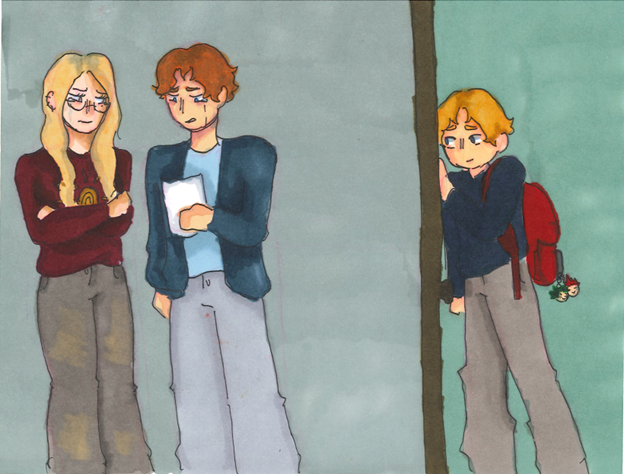
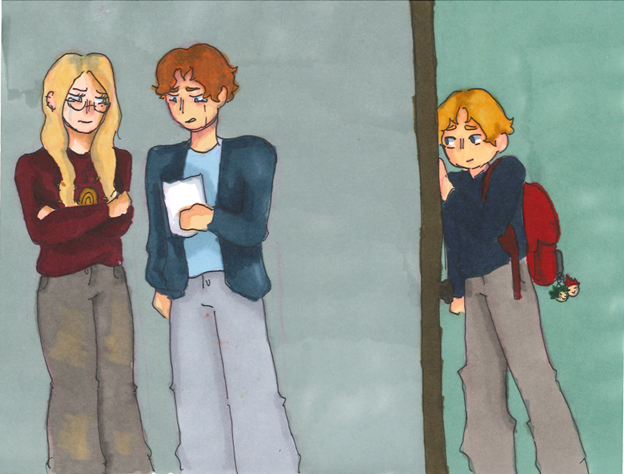
Students in the Cornerstone Classical School Upper School humanities program recently received an unexpected and memorable gift: a small illustrated book drawn directly from The Iliad, one of the central texts studied during the year. Titled A Young Scholar’s Bedtime Story, the book was written by their humanities professor and illustrated by Micah Berg, a student in the class.
The book reframes the epic violence of The Iliad as a mock “bedtime story” for students. Written in elevated, Homeric language, the text imagines a child lying awake at night, hearing the quiet sobs of a parent elsewhere in the house because the parent has just reviewed the student’s report card; and turning to The Iliad for comfort. The irony is intentional. Scenes far too violent to read to children are presented as soothing precisely because they drown out anxiety, guilt, and fear about grades and expectations.
The book is not an isolated novelty. It emerges from a rigorous humanities curriculum in which students read and discuss foundational texts of the ancient world, including The Iliad, Plato’s Republic, Euripides’ Bacchae, Aristophanes’ Clouds, and Thucydides’ Peloponnesian War. These works are not treated as museum artifacts but as living conversations. Guided classroom discussion invites students to wrestle seriously with questions of justice, power, virtue, reason, madness, rhetoric, violence, and the limits of human wisdom.
In these discussions, students are not merely asked what the texts say, but what they assume about reality. Homer’s glorification of heroic violence, Plato’s confidence in rational order, Euripides’ exposure of the inaccessibility of a god, Aristophanes’ satire of intellectual arrogance, and Thucydides’ grim realism about politics and war all present competing visions of what it means to be human created in the image of God. The classroom becomes a place where students learn to name these visions, compare them, and critique them.
Crucially, the goal of this engagement is not simply historical literacy. Students are challenged to return to Scripture with sharper eyes and deeper questions. By encountering ancient pagan attempts to explain suffering, justice, power, and the divine, students are better equipped to see what is distinctive about the biblical vision of God. The Bible is not read in isolation, but in conversation with the ancient world it emerged from and spoke into.
A Young Scholar’s Bedtime Story captures this vision in miniature. The book quotes directly from The Iliad, often selecting some of its most graphically violent passages, and follows each with darkly comic, lullaby-like commentary. The humor works because students know the text well; they have already read these scenes seriously in class. What changes is the frame. The epic’s violence becomes a mirror for modern academic anxiety, parental expectation, and the pressure to succeed.
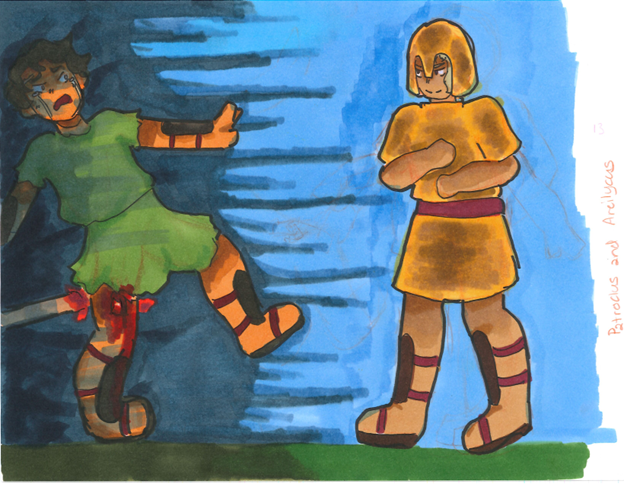
The illustrations by Micah Berg add another layer of meaning. Created by a student who has wrestled with these texts firsthand, the artwork reflects a central aim of classical education at Cornerstone; students are not only consumers of great works, but participants in an ongoing tradition of reading, responding, and creating.
Far from trivializing Homer or the humanities, the book underscores their enduring power. Ancient texts persist because they speak honestly about fear, failure, ambition, and hope. By placing The Iliad at the bedside of anxious students, Cornerstone’s humanities program reminds them that they are not the first young people to live under the weight of expectation or to seek rest amid disappointment.
In the end, the bedtime story does what classical education always seeks to do; comforts without lying, challenges without crushing, and invites students to keep thinking: about the ancient world, about Scripture, and about the God who meets them in both.
Leave a Reply
Want to join the discussion?Feel free to contribute!