
After completing John Milton’s Paradise Lost, our high school humanities class turned to Daniel Defoe’s Robinson Crusoe. The two books appear very different. One describes a war in Heaven and humanity’s expulsion from Eden, the other follows a shipwrecked sailor learning to grow grain, make pottery, domesticate goats, and survive on an island. Yet both works ask a similar question, Will human beings receive creation as a gift, or will they attempt to possess it as though it belonged entirely to them?
Even after Robinson is shipwrecked on a remote island, his first instinct is possession. He inventories everything he recovers from the ship, builds walls, measures his land, and gradually imagines himself as the ruler of his island. He transforms a few seeds of grain into bread, clay into pots, trees into shelter, and wild land into a place capable of sustaining human life.
This is human “sub-creation.” Robinson does not create anything from nothing. He receives soil, seed, rain, animals, intelligence, time, and strength, and then cultivates their possibilities. The lingering question is whether he will recognize them as gifts.
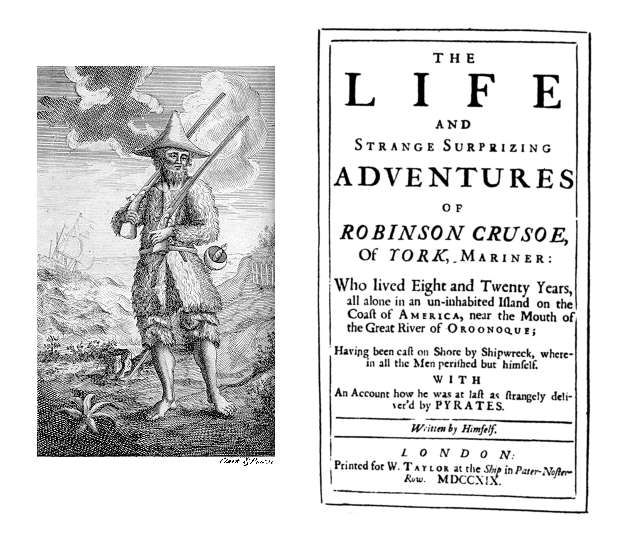
Freshman Eden Barth described Robinson’s transformation: “Robinson at first did not see creation necessarily as a gift. However, the longer he was on the island, the more he saw God’s providence in nature and viewed creation as a gift.”
At first, Robinson measures his circumstances almost entirely by what he lacks. The island is a prison because it is not the life he intended to possess. Over time, however, he begins to notice what has been preserved rather than only what has been lost. He has survived when everyone else died. Supplies from the wreck remain available. Grain grows unexpectedly. The land produces food, and his body retains the strength to work.
The island itself has not changed. Robinson’s vision has changed. What once appeared only as deprivation begins to look like providence.
Sophomore Nahla Greene expressed the tension well: “Crusoe makes himself a ruler over his island, but eventually recognizes that all he has is God’s.”
While Robinson learns gratitude, but he does not immediately unlearn domination. He can thank God for providence while still assuming that Providence has placed other people beneath him. Defoe allows us to see how easily religious language can coexist with habits that have not yet been transformed.
Freshman Paxton Herrs compared Robinson with Milton’s Satan: “Robinson views creation as though he does not own it but should rule over it. Satan thinks he should have power over creation and that it is from Satan, not God.”
That distinction helped us continue an idea from Paradise Lost. Satan possesses created life and power but refuses to acknowledge their source. He declares that his power is his own and attempts to turn Hell into a kingdom of his making. Robinson also seeks mastery, but he gradually learns that cultivation does not make him creation’s ultimate owner.
Sophomore Isaac Alexander put it this way: “While Satan and Robinson had very separate viewpoints, Robinson learned to enjoy the gift he had received on the island, whereas Satan tried to claim possession of the island [Hell] he was on.”
Satan looks at what he has received and says, “This is mine because my power made it.” Robinson slowly learns to say, “I have worked for this, but I did not create the soil, the seed, the rain, my strength, or the life that allows me to work.”
This does not diminish Robinson’s labor. It gives his labor its proper meaning. Gratitude does not require pretending that human effort is unimportant. It means recognizing that effort itself depends upon gifts we did not give ourselves.
Robinson’s story therefore moves, imperfectly, from possession toward stewardship. I own this because I mastered it becomes I have been entrusted with something I did not create.
That movement is incomplete, and Robinson’s treatment of characters like Xury and Friday troubled the students. If creation is truly gift, then other people cannot be reduced to possessions, servants, or supporting characters in our own story. Receiving creation faithfully means recognizing that our neighbor has also been created by God and possesses a life that does not belong to us.
That may be one reason Robinson Crusoe remains worth reading. Robinson is neither a simple hero nor a simple hypocrite. He is a person whose vision changes before all his habits do. He learns to see providence in the island but does not always recognize the full implications of that belief.
Leave a Reply
Want to join the discussion?Feel free to contribute!